

Table of content
- Rehabilitation Medicine
- 🎗️ Basics + Methods
- 🦢 RA / OA Rehabilitation
- 🗼 Lower back pain
- ⚡ Neurologic rehabilitation
- 💪🏼 Post-traumatic upper limb rehabilitation
- 🫀 CV rehabilitation
Member Resources
 Year 4
 Year 5
 Year 6
Rehabilitation Medicine
🎗️ Basics + Methods
deals with prevention/Dgx/Tx of patients with limited functionality / DISABILITY
⇒ assists individuals to achieve + maintain:
- optional functionality,
- socio-professional + home re-integration
- cognitive/psychological ability + quality of life
- Pain (chronic/acute)
- Rheumatic diseases
- Neuro diseases
- musculoskeletal + neuromuscular
- post-traumatic
- gait + walking disorders
- Skin
- decubitus + other skin wounds
- incl. amputations/burns
- CV + respiratory diseases
- neoplasia
- geratric + pediatric rehab
STANDARDIZED ASSESSMENT OF AN INDIVIDUALS HEALTH CONDITION + ANY STATE THAT MIGHT BE ASSOC. WITH IT
⇒ allows global communications
⇒ allows comparison of data
⇒ etc.
individuals health conditions:
→ creation of etiological frameworks + diagnosis of disease
Corresponds with the pathological processes (health condition)
- Pathology (whats the etiology: disease/trauma? )
- Impairment (how is a organ system affected by that? (anatomical, psychological, physiological) =Deficiency?
- Disability (how is the persons acitivity affected? = restricted activity?) = incapacity?
- Handicap (what is the socal/profession/personal disadvantage of having an impairment or disability?) = participation?


- Body functions + structures that are impaired by disease
- Objectification of body function
- 0 - no
- 1 - mild
- 2 - moderate
- 3 - severe
- 4 - full
- 8 - not specified
- 9 - not applicable (based on ICF assessment criteria)
- Affection of body structures
- The extent or lesions can be classified as follows:
- 0 - no affection
- 1 - mild affection
- 2 - moderate affection
- 3 - severe affection
- 4 - full affection
- 8 - not specified
- 9 - not applicable
Functional Disorders:
Quantification of Acitvity limitation and participation restriction, using:
⇒ capacity indicator
CONTEXTUAL FACTORS (life + life condition)
- Environmental factor (pos/neg impact)
- Personal factor (i.e. gender, race, age, fitness, comorbs, social-cultural, profession, psychological)
- (early) medical stage = onset + Tx of disease
- Socio-professional rehab stage = i.e. self-care + occupational rehab
- Self-care
- work + educational acitivity
- age-appropriate (leisure) acitivities (i.e. sports, social acitivies)
- Adjuvant Tx methods (→ prepare for proper occup. acitivity)
- Physical agents are esp. useful during this stage!
- Methods + Equipment that needed to be performed/used used later in the process
- Execution of the everyday-life activites by the patients
- Occupational performance archieved
- mobility
- self-care
- communications
- object manipulation (i.e. keys, doors, windows)
- household-activites
- object manipulation (vacuum cleaner, fridge etc)
- community skills (i.e. shopping, public transportation, financial planing)
- Self health care (medicine, setting up doctor appointment)
- Safety measures
ADL and I-ADL outcomes:
- Independent: The patient is capable of performing activities on their own.
- Supervised: The patient requires supervision for safety purposes.
- Minimal assist: The patient needs supervision, instructions, and less than 20% physical assistance from a person.
- Moderate assist: The patient requires supervision, instructions, and 20-50% physical assistance from a person.
- Maximal assist: The patient needs supervision, instructions, and 50-80% physical assistance from a person.
- Dependent: The patient can rarely perform 1-2 steps independently and at a slow pace, experiences quick fatigue, has low confidence, poses a risk of accidents, and requires complex assistance equipment to carry out basic activities such as eating. Additionally, they require over 80% physical assistance from a person.
F → it is just part of it

medical speciality that uses natural PHYSICAL factors:
⇒ mineral water
⇒ mud
⇒ climate factors
- At least 1g salt/ Liter
- Certain chemical (i.e. Fe) in conc. with therapeutic value
- Certain gases (i.e. CO2) in conc. with therapeutic value
- ≥20°C
- Scientifically proven curative action

- Internal treatment (crenotherapy) or drinking cure
- External treatment associated with baths and other hydrotherapeutic procedures
- Inhalations - aerosols or nebulization
- Gargles
- Injections

- Mechanical effect → ↑hydrostatic pressure → ↑Cardiac output, natiuresis+diuresis
- Anti-inflammatory & Chondro-protective
- ↓PGE2, Leukotriens (LTB4), Cytokines (IL-1), TNF-alpha
- ↑IGF ⇒ cartilage metabolim
- antioxidative mechanism (unclear)
- Thermal effect (35°C)→ stress
- Chemical effects (i.e. in psoriatric arthritis)


→ ACTH→cortisol
→ GH
(DOES NOT alter circadian rhythm of these hormones!!)
- RA
- OA
- Ankylosing spondylitis
- Fibromyalgia
- Psoriatic Arthritis
- Oligomineral/Trace mineral waters = akratic waters
- Akratopegic <20°C
- Akratothermal ≥20°C
- Carbonated (CO2) waters
- ↑ tissue oxygenation + perfusion
- VEGF expression ⇒ neocapillary formations
- ↓BP (↓HR + periph. vasodilation = digitalic effect)
- better ventricle filling
- ↑Blood fluidity
- Stimulation of GI-tract (↑secretion+↑motility)
- ↑Diuresis
- Indications for internal cure:
- Gastritis with hypoacidity, enterocolitis, pyelonephritis, microlithiasis
- Indications for external cure:
- Cardiovascular: high blood pressure, compensated myocardial and heart valve diseases, chronic peripheral occlusive arterial diseases
- Ext: unstable CV disease
- Internal: RF, Elektrolyte dysbalance, unstable ↑BP
- Heart failure
- Advanced atherosclerosis
- Unstable angina
- Aortic aneurysms
- Renal failure
- Disorders of water-electrolyte metabolism
- Unstable high blood pressure (HBP)
- Sodium cloride (salt) waters
- Analgesic + anti-inflammatory
- ↑↑Dischardge in hydrokinesitherapy
- optimization of Endocrine functions
- MUSCULOSKELETAL dieases
- GENITAL DISORDERS

internal → 🍤 GI
external → 🫀CV
Contraindications for external cure:
Contraindications for internal cure:
(inflammat/degenerative joints, posttraumatic, neuralgias)
(inflammation (vaginal lavage) + ovarian insuff)
low → ≤15g/l
Gastritis with ↓acid (stimulate gastric secretion)
i.e. dry bronchitis (i.e. asthma, chronic dry) + atrophic rhinitis
⇒ mucolytic + anti-inflamm. effects

CONTRAINDICATION: bronchiectasis, purulent purulent bronchitis

organic + mineral substances
- specific weight (↑ with mineral substances content → compression + CV effect)
- hydropexis (water retention capacity → how much water should be added to form a optimal bathing-mass
- thermopexis (heat absorbtion + maintainance → better than water)
- plasticity (property to spread + mould on the body → depends on dispersion)
- ↑ Circulation → vasodilation, edema-resorption
- Nerve endings → analgesia
- Ovarian function stimulation
- Packing → partial/total covering with layers of mud (cold or warm)
- Mud bath (35-40°C)
- Cataplasm - local covering (45-50°C)
- Mud unction (oil, cream) + sunlight exposure (Egyptian methode)
- +/- topical vaginal application (ointment, inject, swabs)

- chronic degenerative/inflammatory rheumatic diseases
- chronic gyn diseases
- periph nervous system disorders
- endocrine disorders (functional)

= SEASIDE THERAPY
carried in places where the see-climate has an immediate effect on the patient
- Stimulatory effect due to:
- Temperature contrast (Air + sea water)
- movement of water
- Salt effect (see above)
- Heliotherapy
- Low allergen/sedative effect
- Warm sand, sulfurous material, marine products
- ↑general circulation (CV + respiratory stimulation)
- muscular + nervous system
→ ↓ of liquid stasis
→ influence on internal organs
→ resorption + regeneration of inflammed tissue (↑ basal metabolism)
→ pain relief
→ improved sleep + relaxation
→ ↓muscular fatigue

- Effleurage (light pressure)
- Petrissage (deep pressure)
- Petrissage is a massage technique that applies deep pressure to the underlying muscles.
- It involves kneading, wringing, skin rolling, and pick-up-and-squeeze movements.
- The technique is used in rehabilitation medicine and is beneficial for muscle manipulation and relaxation.
- Friction (pressure through fingertips)
- Friction is a massage technique used to increase circulation and release tight areas, particularly around joints and where there are adhesions within the muscles or tendons.
- It is defined as "an accurately delivered penetrating pressure applied through fingertips" (Cyriax, 3).
- Deep frictions are suitable for treating tendinopathy, muscle strains, ligament lesions, and scar healing.
- Vibration (vibration movement)
- Tapotement (percussion)
- Tapotement is a technique used in Swedish massage.
- It involves rhythmic percussion using the edge of the hand, a cupped hand, or the tips of the fingers.
- There are five types of tapotement: Beating, Slapping, Hacking, Tapping, and Cupping.
- Tapotement is used to stimulate the nervous system and release lymphatic build-up.


- Inflammatory (rheumatic) + post-traumatic diseases
- neurological, sleep disorders
- Drainage of
- venous + lymphatic stasis
- pulmonary secretion (bronchitis/bronchiectasis)
- Chronic constipation

- Vascular fragility !!
- skin lesions
- pregnancy
- Organ failures + acute disorders
- venous thrombosis
- infections
- cancer
- psychosis, addiction (narcotic or alcohol)

- Musculoskeletal (pain, weakness, limited ROM, posture,...)
- Neuromuscular (pain, balance, stability, control, etc)
- CV / Pulmonary (aoerobic capacity etc.)
- Tegmentum (adherent scarring)
- ↑Muscle force + hypertrophy
- effect after short period of time
- doesnt require equipement (simple technique)

- dont improve joint flexibility
- rapid tiredness 😴
- LOCAL blood + lymph flow compression
(but active movement ↑ the flow in general)
- joint stiffness
- spasticity (neuro patients)
inflammatory joint + thrombosis
- painful / inflammatory joint
- intra-articular exudate
- venous thrombosis
- Break movement into small units
- without ext. resistance + low/high speed
- large number of repetitions → automatization
- progress to become more complex
- has to be stopped at the first sign of fatigue
- sensorimotor NS
- vestibular
- visual
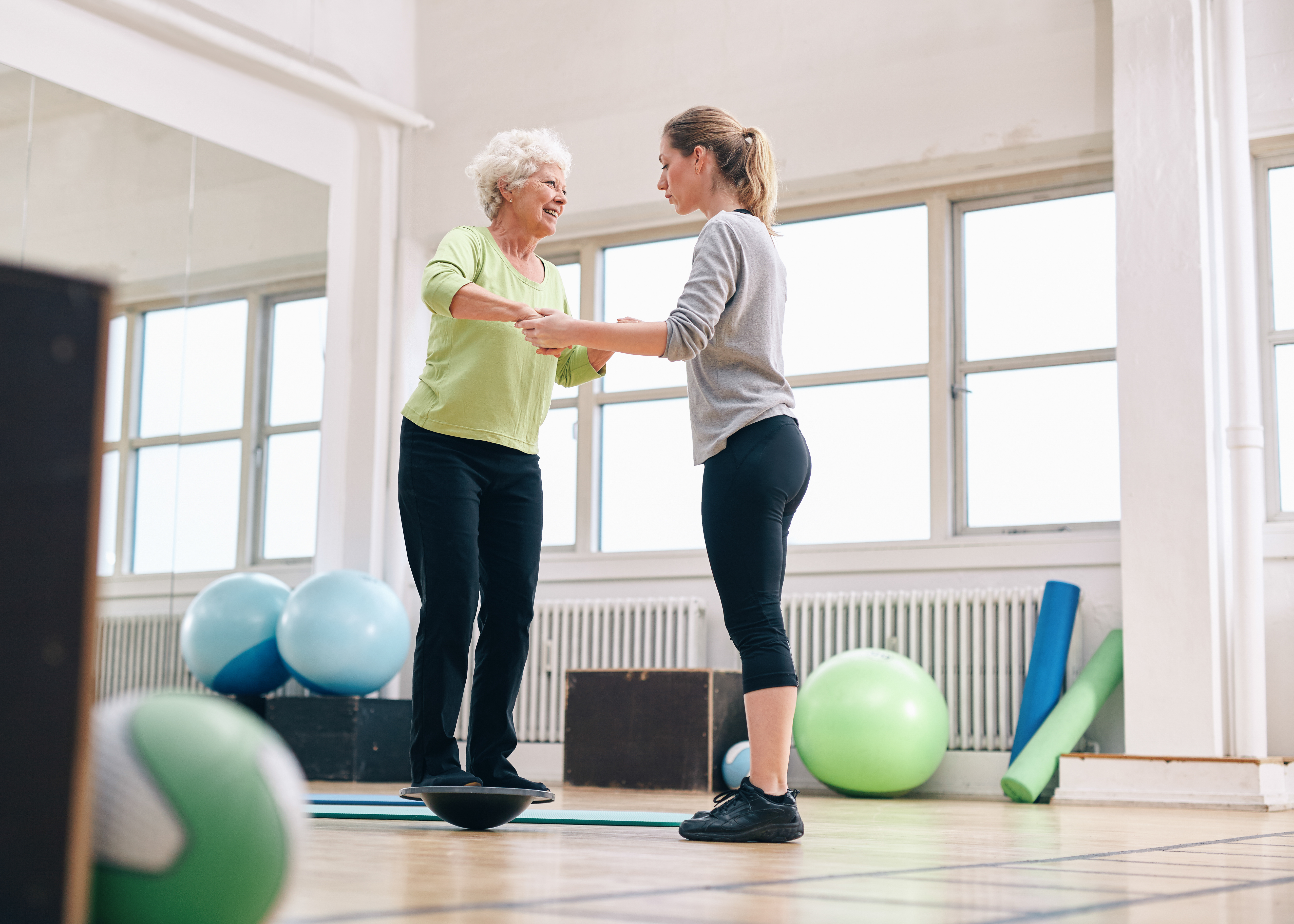
balance on unstable surface 📷
- ↑ joint mobilits (↓pain+contraction)
- higher resistance → ↑muscle strength
musculoskeletal (rheumatic, post-traumatic, neurolog.)
uses electrical current + energies (i.e. light, US)
- Electrical currents:
- Low freq (Galvanic, TENS)
- Energies:
- Light → i.e. Laser, UV
- US

b. Medium frq

c. high freq (continous short wave/short pulse)

- excito-motory
- analgesic
- Forms of electrical energy
- Low frequency current (0-1000Hz)
- Galvanic current (constant continuous current)
- Current of impulses (Rectangular [TENS], Trangular, Trapezoid, Exponential)
- Diadynamic current
- Sinusoidal current
- Medium frequency current (1000-100000Hz)
- Interferential current
- High frequency current (27,12 MHz)
- Continuous short wave current
- Short pulse wave current
- Forms of energy generated by electric current transformation
- Phototherapy
- Infrared radiation therapy
- Ultraviolet radiation therapy
- LASER therapy
- Ultrasound therapy
- Magnetotherapy


- Biological effects:
- Ultrasound mechanical energy induces mechanical vibrations in material substrates.
- Vibrations transmitted from one point to another.
- Activation of molecules with a speed equal to that of the source.

- hydrostatic pressure (see above)
- facilitates movement (achrimedes law ⇒ body pushed upwards in water)
- Vasodilation if mechanical factors added (rubbing, shower)
37
33
warm → ↑HR + workload + vasodilation
cold → ↓HR + workload + ↑diastolic BP + vasoconstriction
cold → brady
heat → tachy
heat → relaxation
cold → ↑tone + chills (if prolonged)


CO2 | Salt | Mud | Massage | Exercise | ET & Hydro | |
MSK💪🏼 | ✅ | ✅(chronic) | ✅ | ✅ | ✅ | |
NERVOUS⚡ | ✅ (+endocrine) | ✅ | ✅ | ✅ | ||
GYN🍉 | ✅ | ✅(chronic) | ||||
GI💩 | ✅(motility) | ✅(gastritis) | ✅(chronic constip.) | |||
CV🫀 | ✅(+diuresis) | ✅ | ||||
DRY BRONCHITIS🫁 | ✅(inhaled) |
🦢 RA / OA Rehabilitation
all artificial + occupational
- Exercise program
- Occupational therapy
- Splint, braces, orthotic devices, walking aids
- Massage therapy
- Electrotherapy, thermotherapy, and hydrotherapy
- active + passive movement
- isometric, isotonic + stretching 📷
- water -exercises
- JOINT
- ↑motion + functionality
- ↓swelling
- ↑bone density
- MUSCLES
- ↑strength
- ↑static endurance
- ↑Aerobic capacity
- Post-exercise pain lasting more than 2 hours
- Undue fatigue
- Transient increased weakness
- Increased joint swelling
all of them basically
- Pain amelioration:
- low-frequency current (TENS, diadynamic),
- medium-frequency (interferential),
- high-frequency (diathermy),
- ultrasound
- low LASER therapy.
- Stimulating circulation: Enhancing blood flow to affected areas.
- Decreasing contractures: Reducing muscle stiffness and immobility.
COLLAGENASE → JOINT DESTRUCTION
cold → ac. inflammatory joint
heat → subacute/chronic joint
learn how to deal with ACTIVITIES OF DAILY LIVING (ADL) with their disability
→ self-care
+IADL
- Exercise program
- Occupational therapy,
- splint, braces, orthotic devices, walking aids
- Massage therapy
- Electrotherapy
- Thermotherapy
- Hydrotherapy
- Strenghtening all muscles that cross the affected joint
- ↑ROM + streching
- gait, balance + aerobic
- teach joint protection
- good posture + change posture regularly
- maintain ROM + strenght
- reduce joint pain/load
- unload painful joint
- avoid overuse
- use adaptive equipment (i.e. splints)

hand splinitng → esp. 1st CMC
→Massage, Electro, thermo → see RA
🗼 Lower back pain
T
- Low back pain (LBP) can be caused by over 300 disorders and mechanical problems of the spine.
- The most common cause of LBP is degenerative conditions, such as osteoarthritis (OA) of the spine, discopathies (including disc herniations), facet syndrome, and spondylolisthesis.
- Other causes of LBP include static disorders like scoliosis and kyphosis, as well as extraspinal problems such as kidney, colon, ovaries, appendix, and prostate issues.
- Neurological diseases, inflammatory diseases (e.g., ankylosing spondylitis), infectious diseases (e.g., tuberculosis), tumor diseases, traumatic diseases, metabolic diseases (e.g., osteoporosis), and psychogenic problems like depression and hypochondria can also lead to LBP.
- Ø signs of spinal pathology (Øinflammatory, Østenosis, Øcompression ⇒ Øradicular pain)
- Ø red-flags
- (degenerative lesions on MRI but poor correlation to symptoms)
- Radiculopathy (”sciatica”): Irritation of the nerve root associated with sharp or burning pain at the back or side of the lower limb, typically radiating downward to the foot or ankle.
- Pain usually radiates below the knee.
- Radicular pain often accompanied by numbness or tingling sensation.
Neurogenic claudication, also known as pseudoclaudication, is caused by the narrowing of the spinal canal or radicular grooves, typically due to intervertebral disc herniation or spondylolisthesis (overlapping vertebrae).
- obesity
- physical deconditioning (faules 🐽 or extended bedrest)
- living in an industrialized country
- Acute: < 6 weeks
- Subacute: 6-12 weeks
- Chronic: >12 weeks
T
- Cancer redflags?
- history of cancer
- night pain, weightloss
- age >50
- Trauma history?
- Neuro/Nerv?
- Sensory disturbances?
- Neurological disease?
- Inflammation? → Fever?
- Urination problems, i.v. drug abuse? → RF?
- steroids? → osteoporotic fracture (female: ↑risk)
Mnemonic: CUNITS
- pain / sensory disorders in specific dermatomes
- ↑ with coughing + sneezing
- Lasegue + 📷
pain upon the passive flexion of the limb in extension
- (Schober)
- VIsual analog (assessment) scale 📷→ good for evolution evaluation
- Questionaires → Oswestry 📷 + Roland Morris
- 0% to 20% Minimal disability: The patient exhibits minimal disability and can effectively perform most daily living activities. Treatment may not be necessary, except for providing advice on proper lifting and carrying techniques (back school program).
- 21% to 40% Moderate disability: The patient experiences pain and disability when sitting or standing, avoiding activities such as traveling and socializing. Professional activity may also be affected. Personal care, sexual activity, and sleeping remain unaffected. Conservative treatment is recommended.
- 41% to 60% Severe disability: Pain is the primary issue in this patient group, impacting activities of daily living. Detailed investigations are necessary.
- 61% to 80% Marked functional limitations and participation restrictions: Low back pain significantly limits the patient's functionality and participation in various aspects of life.
- 81% to 100% Bed-bound or exaggerating symptoms: The patient is either bed-bound or demonstrating exaggerated symptoms.
ANALGESICS + ANTI-INFLAMMATORY
- NSAIDS + Analgesics
- STEROIDS
- GABA derivates
- anxiolytics
- Exercise therapy
- early: esp. trunk stabilization
- later: paravertebral, pelvic, abdominal + quadrizeps muscle
- Massage → esp. subacute + chronic LBP
- Posture/Pull-ups → only if Ø fracture/radiculopathy
- Back schools → teach posture
- Thermal + electro (low, medium freq, laser, US)
relaxation, stretching, strengthening, trunk stabilization
acute stages
- Patient education and exercise are the most effective treatments for chronic nonspecific low back pain (LBP).
- Kinetotherapy can be conducted at home, individually or in groups, using various exercise protocols.
- Toning exercises target deep back muscles and the transverse abdominal muscle.
- Therapeutic exercises reduce pain intensity and disability in the long term.
- Cognitive behavioral therapy provides short-term relief.
- Combined stretching and toning exercises are preferred, but no standardized protocol exists.
- Dynamic Iumbar stabilization exercises are effective for chronic upper back pain (UBP).
- Isometric contractions and controlled limb movements are part of the exercise routine.
Can also be used!
i.e. salted water (+thalassotherapy) + mud
⚡ Neurologic rehabilitation
3
FUNCTIONAL RECOVERY (selfcare + mobility)
neuroplasticity → rehab can be done in every period (not only in first 3 months)

⇒ Re-learing ADL + IADL
F → other way around
UPPER LIMB = WORSE
⇒ Functional independance Measure (FIM)📷

⇒ asses level of asstistance the patient need for functional status
⇒total independance to total dependance
T
The nonlinear pattern of neurological recovery after a stroke is influenced by various mechanisms. These mechanisms include:
- Salvage of penumbral tissue surrounding the infarcted area.
- Elevation of cerebral shock, also known as "elevation of diaschisis."
- The brain's ability to adapt through neuroplasticity.
- The highly interrelated nature of mechanisms 1, 2, and 3, which work together.
(Diaschisis is a Greek word meaning ‘shocked throughout.’ The term was applied medically and scientifically by Von Monakow to describe dysfunction at sites remote from, but connected to, the site of injury or insult.)
- protect skin (tegmentum) + prevent decubitus
- maintain the function (trophicity) of somatic structures
- maintain joint mobility
- prevent harmful posture/contractions
24-48h
Exercise (adjusted to stage) + occupational
ACTIVE
Brunnstrom, Bobath + Rood technique
- Brunnstrom technique: This approach is based on the following premises:
- Reflexes in healthy individuals undergo modification during development and are rearranged into purposeful movement by higher centers in the brain.
- Reflexes can be utilized when the central nervous system (CNS) reverts to an earlier developmental stage, as in hemiplegia.
- Reflexes should be used to elicit movement when none exists, following a normal developmental sequence.
- Proprioceptive and exteroceptive stimuli can be therapeutically used to evoke desired motion or tonal changes.
- Neuromuscular electric stimulation → plasticity in spinal cord
- Constrict-induced movement therapy (↑use of upper limb at least 6h/d)
- Special equipment: hemichair, pyramid canes, hand splint, hemi-sling
- lower limb orthosis → FILM WALKING 📷
- Changes to house/kitchen/houshold items
- learning 1 hand techniques 📷
- Robot assisted therapy
- Thermotherapy
- Mobilization / Exercise
- mobility (joint)
- Movement speed + coordination + Gait
- Axial-peripheral and peripheral-axial-peripheral exercises
- Trunk rotation concomitant with arm movements or steps
- Exercises with the ball, with sticks, associating lower limb movements
- Walking exercises with upper limb swinging
- Walking exercises following routes on the floor
- Balance
- Transfers
- Postural reflexes: Tonic postural reflexes facilitate the transition between different positions, such as dorsal decubitus to sitting position and sitting position to standing position.
- Cervical spine flexion: Flexion of the cervical spine helps in transitioning from dorsal decubitus to the sitting position.
- Cervical spine extension: Extension of the cervical spine aids in changing from the sitting position to the standing position.
- Breathing re-education
- Facial expressions
- Facial muscle relaxation exercises: Perform exercises in front of a mirror to relax facial muscles.
- Analytical exercises: Focus on specific areas such as the forehead, eyebrows, eyes, cheeks, and mouth.
- Global exercises: Engage in exercises that involve expressions of laughter, crying, and anger.
- Massage
before exercise therapy → joint mobility
(circulatory, vasodilation, relax)
movement speed + coordination (2)
starting movement
(akinesia is dominant is this stage)
MOTIVATION!
music, clapping, vocal re-inforcement
stable on feet
Stimulation of balance reactions
Example: patient standing between two parallel bars, with the head forward → Slight pushes in different directions to disrupt static balance → Techniques to facilitate stability
Walking is initiated when the patient achieves stability in the standing position, requiring them to overcome a challenge commonly known as "the first step obstacle.”
effleurage (light pressure/ smoothing) + vibrations
ASAP → avoiding/delaying abnormal movement patterns
💪🏼 Post-traumatic upper limb rehabilitation
Stage 1: immobilization
- Immobilization of the elbow to the body according to Dujarier
- Immobilization with the arm in abduction, in a thoracobrachial orthosis
- Sling immobilization
Stage 2: Reha Tx after removal of immobilization → massage, exercises
in case of injured muscles or incompletely consolidated fractures
Stage 3: gradual use of injured area (pain-based controll) 📷
Stage 4: Reha Tx → restore full ROM + muscle strenght+flexibility
- massage
- initally cooling / later local heat
- hydrotherapy
- ET (low+medium freq + Laser + US)
- Exercise → spare rotator cuff: partial abduction + slight ext. rotation
3
15-20d
above
→ then continous lower plan
patient can raise his arm with 1kg in his hand
like throacobrachial orthesis
Tx is usually orthopedic
T → after 2 weeks
active movement
Øexceeding horizontal plane during elevation
muscle strenghtening with resistive movement
⇒ serratus ant.
⇒ head, neck, shoulder, dorsal spine posture
1 month
no, NOT REQUIRED! ⇒ immediate functional re-education
exercise
deltoid muscle
(deltoid paralysis)
- massage
- exercise
- mainly passive movement (+/- in water)
- pulley self-therapy 📷
- electrostimulation

T #1 post traumatic
Other Etiologies: Connective tissue infections, myocardial infarction, lung neoplasms, hemiplegia, poliomyelitis sequelae, diabetes mellitus, chronic treatments with drugs such as phenobarbital, hydrazide, etc.
F → not the case
Pain | Skin | Osteoporosis | Joint impact | Extra | |
Stage 1 (immediate - several weeks) | Severe | hot + wet | early | - | hypotonia |
Stage 2
(next 3 month) | + | cold + wet
(+cyanotic) | spotted (on Xray) | stiffness | reduced hair (pilosity) |
Stage 3
(irreverible) | ↓ | cold + dry | marked (on Xray) | functional impotence | extends to limb, skin + muscle disorders |
severel weeks (lel)
- Electrotherapy
- Hydro-thermotherapy
- Therapeutic massage
- Exercise therapy
compare to circumflex → same + thermo! (is controversional in circumflex)
prophlyaxis of STIFFNESS
→ short term immbolization in plaster cast ⇒ bivalve splint with alternating position 📷
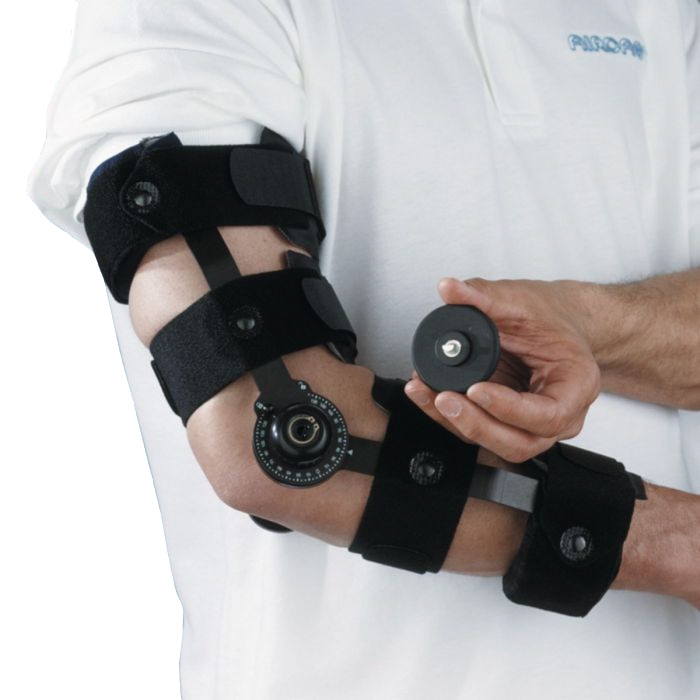
→ should, fist + hand mobilization
- Improving pain
- Fighting vasomotor and trophic disorders
- Regaining joint mobility
- Increasing muscle strength
- elbow dislocation
- humeral shaft (diaphyseal) fx
- in athletes: ellbow injuryies + ulnar collateral lig. rupture
early but long process (3m)
yes
(for 3 w → then slight passive mobilization → active after 6w
- Static (resting, protective orthoses)
- Dynamic 📷
- Replacement (functional) orthoses
- General exercise therapy for hand rehabilitation focuses on:
- Improving range of motion (ROM)
- Increasing muscle strength and resistance
- Enhancing movement execution speed
- Improving dexterity and ability
- Specific exercises for the hand
- Postures: anti-declive, serial postures in splints, during night rest to prevent deviations and deformities
- Stretching and manipulations
- Passive and passive-active mobilizations
- Active mobilizations: free and resistance exercises, neuromuscular facilitation exercises, mechanotherapy, occupational therapy
- Physical procedures: therapeutic massage, hydrothermotherapy, electrotherapy (exponential currents, galvanic baths, ultrasound, diapulse, laser)
- Orthopedic-traumatic causes that may require orthosis treatment:
- Traumatic injuries of the hand complex
- Injuries in athletes
- Post-intervention status for phlegmons or application of flaps
- Reimplantations in the hand complex
- Post-burn syndromes - maintenance of the hand in a neutral position to prevent muscle and joint contractures and stiffness
🫀 CV rehabilitation
myocardial mass + tension
- Maximal oxygen uptake (V02 max) reflects a patient's aerobic physical capacity and influences their submaximal resistive workload during exercise training.
- Uptake/beat is the volume of blood pumped per beat and is inversely related to heart rate. It is directly related to venous return and blood flow volume.
- Heart rate is the number of myocardial contractions per unit of time and is linearly related to oxygen uptake. Influencing factors include exercise type, patient's position, health, blood volume, sinus node function, medication, environment, and age.
- Myocardial oxygen consumption (MV02) depends on myocardial mass and tension, indicating force generated during myocardial contraction. It is directly related to ventricular pressure and diameter and inversely related to ventricular wall thickness. Influencing factors include blood pressure, heart rate, ventricular tension, fiber shortening range, and venous return.
- During isotonic contraction, left ventricular load increases, uptake/beat and oxygen uptake increase, and diastolic blood pressure remains unchanged while diastolic volume increases.
- Resistive exercises include both isometric and isotonic weight lifting exercises. Thorough patient screening is necessary, and correct exercise technique should be taught. Initial exercises may focus on thoracic extension, shoulder exercises, arm flexion and extension, lumbar extension, lifts, and knee and leg extension.
metabolic equivalent (MET) → quantification “how much + how hard”
- The metabolic equivalent (MET) is a unit used to measure the oxygen demand during rest periods and in a seated position.
- The MET scale is estimated at 3.5 ml per body kilogram and minute (ml x kg-1 x min-1).
- The MET scale is universally recognized.
Example:
METS | Activity |
1 | Resting in seated position |
2 | Walking at a speed of 2 miles/h |
4 | Walking at a speed of 4 miles/h |
<5 | Poor prognosis; ADL limitation |
10 | Good prognosis with medical treatment or coronary bypass |
13 | Good prognosis unconditioned by the patient's response to other exercises |
18 | Elite athlete |
- Specific cardiac disease (i.e. MI, unstable AP etc, HF)
- PE + DVT
- severe non-cardiac disorder
- severe disability
- Acute myocardial infarction (AMI) or recent EKG-monitored modifications
- Unstable angina pectoris (AP)
- Severe cardiac arrhythmias
- Acute pericarditis
- Endocarditis
- Severe aortic stenosis
- Severe left ventricle dysfunction
- Acute pulmonary embolism or pulmonary infarction
- Any severe non-cardiac disease
- Severe disability
- Lower extremity venous thrombosis
700-2k
- Targed HR
- MET methode (measure VO2max):
Target heart rate = 60-80% of heart rate reserve
= (HRmax - HRrest) x 0,6 + HRrest
(HR max = 220-age)
For instance, if a patient's VO2max is 10 METs, the maximum exercise intensity can be set between 6-8 METs.


30min