


Clinical Biochemistry
- Clinical Biochemistry
- 🐮 Proteins
- 👾 Enzymes
- 🧈 Lipids
- 🍬 DM, Hypoglycemia and Hyperuricemia
- 🍑 Liver, Pancreas, GI exploration
- 🪨 Iron, Heme and Copper Metabolism
- 🦴 Bone, Ca2+, Mg2+, Phosphorus

🐮 Proteins
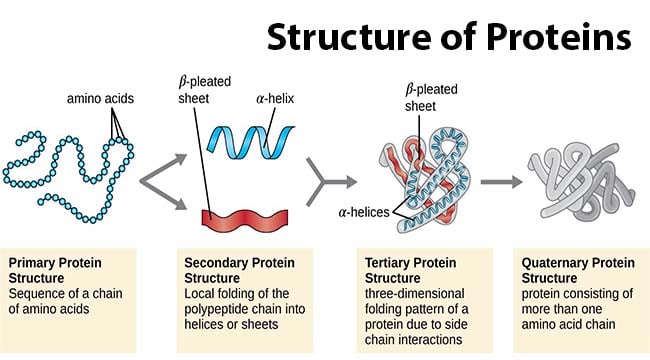
- Proteins are composed of amino acids linked together by peptide bonds.
- Each protein can be described in terms of its structural organization:
- Primary structure: Refers to the sequence of amino acids in the polypeptide chain, including the N-terminal and C-terminal ends of the molecule.
- Secondary structure: Involves the formation of alpha-helices and beta-sheets, which are local conformations stabilized by hydrogen bonds.
- Tertiary structure: Represents the overall shape of a single protein molecule. It includes protein domains, which are specific structural regions that confer specific functions to the protein, such as enzymatic activity.
- Quaternary structure: Describes the final shape of a protein, which is formed by the assembly of several protein molecules. These individual protein units are often referred to as protein subunits, as seen in the example of hemoglobin with its alpha2beta2 subunits.
Mnemonic: CAT HIPE 🐱
- Complement and coagulation factors
- Acute phase proteins: CRP (C-reactive protein), amyloid protein A, haptoglobin, fibrinogen
- Transport proteins: haptoglobin, transferrin, ceruloplasmin, apolipoproteins
- Hormones (proteohormones): calcitonin, PTH (parathyroid hormone), insulin
- Immunoglobulins: IgG, IgA, IgM, IgE, IgD
- Proteinase inhibitors: a1-antitrypsin, antithrombin III
- Enzymes: amylase, lipase, cholinesterase
Mnemonic: HEI ABC HammerThrow, ps ICH LB DC
- coloidosmotic p. maintainance (mainly albumin)
- source for AA
- Buffer
- Transport
- Iron: hepcidin, transferrin, ferritin
- Calcium: calbindin
- Hormones
- Lipids: apoproteins A, B, C, E
- Bilirubin: albumin
- Drugs: cisplatine uses copper transport channels
- Trace elements: copper - ceruloplasmin
- Enzymes
- Immunity
- Hemostasis
- Heme metabolism
- Is used to separate proteins based on their electrical charge and size
- Used to identify which proteic fraction is modified & to orientate towards a syndrome, NOT the cause
- Based on their movement on an electrical field
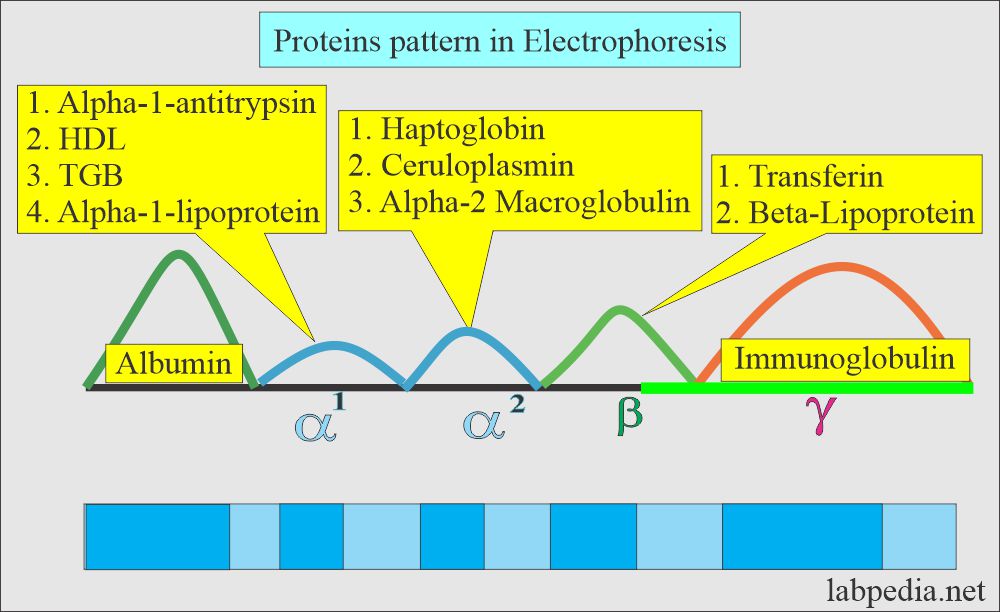
- Albumin: 52-60% (1)
- Alpha-1 globulins: 3-5% (5)
- Alpha-2 globulins: 7-9% (4)
- Beta globulins: 11-14% (3)
- Gamma globulins: 16-20% (2)
qualitative + quantitative change in plasma proteins ⇒ change in albumin/globulins ratio [normal>1]
- Normal TPc
- Decr. TPc
- Incr. TPc

- N: With normal total protein concentration:
- Acute phase reaction
- Chronic inflammation
- ↓: With decreased total protein concentration:
- Nephrotic syndrome
- Liver cirrhosis
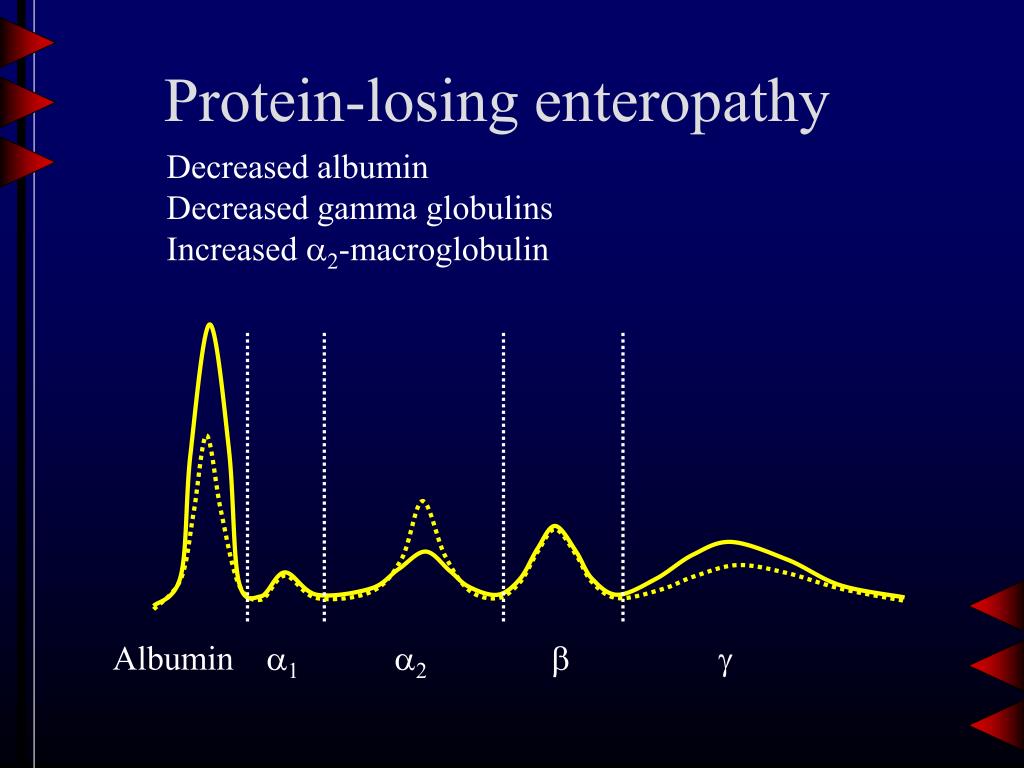
- Exudative enteropathy
- ↑: With increased total protein concentration:
- Multiple myeloma
- Waldenström disease
- Light chains disease
- alpha2 incr. (compensatory)
- albumin decr.
- ↓ albumin (↓synthesis)
- alcohol → IgA incr. ⇒ common block (beta+gamma "bridging")
= blurred distinction betw. beta + gamma
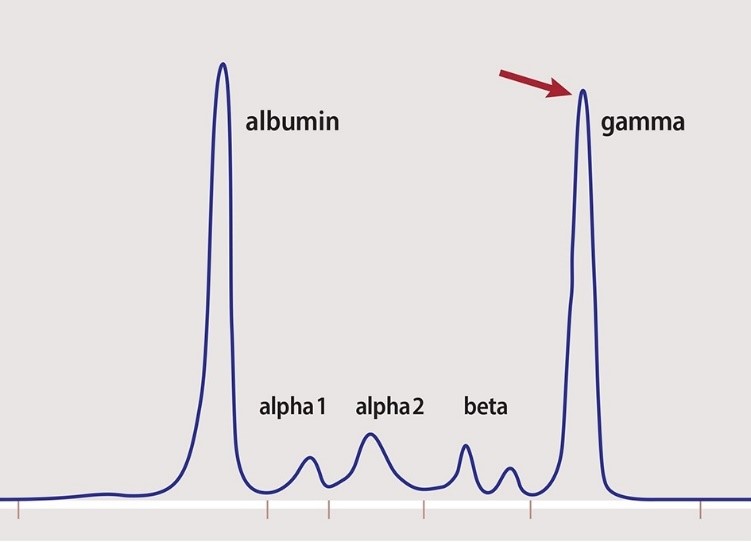
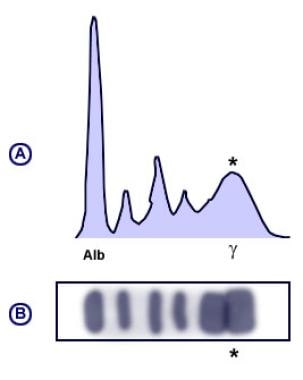
→ sharp gamma peak
only 1 Ig incr. (mainly IgG)

gamma peak (IgM inc.)
- Anemia
- lymphadenopathy
- hyperviscosity syd → internal hemorrhages
kappa + lambda fragments → kidney → amyloidosis
IL1, IL6, TNF
binds to phosphocholine on pathogen → activates complement 📷

- quick incr. CRP
- ESP may be normal in first 24h
- CRP decr. more rapidly after treatment
→ Cardiovascular risk based on CRP levels:
- Low risk: CRP level of 0-2 mg/L
- Average risk: CRP level of 2-4 mg/L
- High risk: CRP level of 4-6 mg/L
- synthesized by the liver
- ↑ in acute + chronic inflammation
- platelet aggregation + clot formation
- avoiding of irritant inhalatin (smoking)
- infusion of A1AT
- liver + lung transplantation
- hereditary (Autosomal dominant)
- secondary: renal failure, nephrotic syd→ loss of ATIII
thrombosis 👣
- recurrent thrombosis + pulmonary embolism in hereditary form
- nephrotic syd → loss of Anti-Thrombin III → higher activity Factor II + X → thrombosis 📷
A tumor marker is a biomarker found in blood, urine, or body tissues that can be elevated by the presence of one or more types of cancer
- detectable in blood when malignant transformation occured
- precise identification of tissue malignancy

- GI
- Liver
- Pancreas
- Breast, Cervic
- CA 15.3
- CEA
- BR27
- EGF
- Cathepsin D


CA125
AFP (alpha-fetoprotein)
- CEA
- bHCG
- SCCA (squamous cell carcinoma antigen)
- cytokeratins (CYFRA)
PSA, free PSA
Calcitonin
- CEA
- CA (19.9)
- NSA (Neuron specific enolase)
- ProGRP
- CYFRA


AFP (alpha feto protein)
CEA
Ferritin
Hypercalcemia (osteolysis)
Alkaline phosphatase
Acid phosphatase
- gonads - testes + ovaries
- hematologic disease
- hepatic
- lymphoma
- melanoma
- neuroblastoma
- CNS tumors
- Neuroblastoma
- Neuroendocrine tumors (small cell lung)
→monitoring treatment of pulmonary+neuroblastoma
Galactosyl Transferase II
Paraproteins = Ig + light chain fragment
Protein M

- ADH
- ACTH
- PTH