


Legal medicine


💀 Death
Permanent cessation of vital functions (including respiratory, circulatory, and central nervous system activities) ⇒ subsequent termination of metabolism

- Clinical death: Transition from life to biological death. Characterized by the cessation of respiratory and cardiac functions (respiratory function first). Lasts approximately 5 minutes. Followed by the occurrence of irreversible changes in cortical neurons.
- Brain death: Characterized by the cessation of cortical activity & isoelectric line on EEG. Resuscitation of cardiac and respiratory functions = useless (irreversible morphological lesions of the cortical neurons).
- Vegetative state: Brain death while vegetative functions continue (only possible in ICUs). Characterized by the absence of cranial nerve reflexes & spontaneous breathing (sometimes cardiac activity continues), and an isoelectric line on EEG.
- Real death (biological): Follows after clinical death. Characterized by the cessation of metabolic processes and irreversible structural changes due to lack of oxygen. Real signs of death appear. Post-vital manifestations persist for a while.
- Apparent death (vita minima): A rare state characterized by anesthesia, loss of reflexes, immobility, and very low respiratory and cardio-circulatory function that cannot be highlighted by classical investigation methods. Often been mistaken for real death.

Early changes:
- Corpse temperature loss: Caused by the cessation of circulation and metabolism, resulting in heat loss in the environment.
- 📷 Dehydration of the corpse: Occurs due to the stopping of blood circulation and subsequent evaporation of water.
- 📷 Postmortepm lividity (livor mortis): Results from the cessation of blood circulation and the passive migration of blood to uncompressed areas.
- Hypostasis: Occurs 2-16 hours after death, characterized by the appearance of small violet red spots that converge in uncompressed areas.
- Diffusion: Occurs after 15-24 hours, characterized by extended violet spots that appear on the lateral parts of the corpse.
- Imbibition: Occurs after more than 18-24 hours, coinciding with the onset of putrefaction. The spots have an intense greenish color and do not disappear on pressure or when the position of the corpse is changed.
- 📷 Cadaverous rigidity (Rigor mortis): Represents muscular contraction and stiffness in the joints, providing information about the position and time of death.
- Installing phase: Takes 2 to 12 hours after death, occurring cranio-caudally. Rigidity reappears if it is gone during this phase.
- State phase: Takes 12-24 hours, and if the rigidity is mechanically defeated, it does not reappear.
- Resolution phase: Appears after 24-48 hours and disappears in the order of installation. It is complete in 3-7 days.
- Autolysis: Early destructive process caused by the action of own enzymes, resulting in increased hydrolysis activity and inhibition of oxidative metabolism.
Late changes:
- Destructive processes:
- Putrefaction: Microbial process caused by the decomposition of organic substances into inorganic substances. Signs become visible within 48-72 hours after death. Starts as green spot at the area of the appendix.
- 📷Marbling: Occurs if there is blood in the superficial vessels, causing a brownish color change with an arborescent look on the skin.
- 📷Swelling and gas formation: Body begins to swell, face becomes unrecognizable, subcutaneous and visceral emphysema appear, and "blisters" containing gas and cloudy liquid form on the skin.
- Organ liquefaction and separation: Organs start to liquefy and melt, laryngeal and tracheal cartilages separate, cranial sutures break, and skeleton parts separate from one another.
- Destruction by animals
- Conservatory processes:
- Violent death: caused by brutal and sudden external traumatic factors
- Nonviolent death: due to intrinsic causes of the body, such as acute or chronic diseases or natural causes at advanced ages
- Death by inhibition: occurs through the action of a low-intensity external traumatic factor on a hyperreflexogenic area, triggering an inhibitory effect
Violent death can be:
- homicide
- suicide
- accident
- others: euthanasia, execution
💥 Trauma

- Primary causality (direct):
- Unconditional (immediate):
- Crushing, destruction of vital organs
- Mechanical asphyxia
- Cerebral trauma with meningeal-cerebral lesions
- Traumatic shock
- Postcombustional shock
- Vascular lesions with hemorrhage: acute traumatic anemia (localized, generalized), rapid arterial tension decrease, vital organs compressed by blood extravasation (including hemorrhagic shock)
- Conditional (mediated):
- Trauma with interposing exogenous factors (environmental factors, treatments)
- Trauma with interposing endogenous factors (premorbid physiological states)
- Secondary causality (indirect):
- Trauma that leads to a morph-functional complex without generating death but produces deadly complications
- Concurrent causes
- More deadly injuries produced by a single object (e.g., ax)
- More deadly injuries produced by multiple objects (e.g., ax, bat, fist)
- More lesions, some fatal while others non-fatal (the fatal ones being specified based on severity)
- More lesions but not directly deadly (post-traumatic shock)
- More lesions produced by different people (assessment based on severity of hemorrhage)
- DDx with lesions produced during lifetime
- Accidental post-mortem lesions (e.g., transport, handling, first aid, incorrect autopsy)
- Lesions caused by aggression after death (e.g., continuing to hit the victim, dismantling the body)
- Lesions caused by animal bites
- Problems with Intention & Premedication
- Expertise on the injured region, intensity of trauma, type of object used, number of hits, and conditions of injury production
- Analysis of premeditation, including choice and preparation of the injuring object
- Priority of death
- Analysis of body, clothing, cadaveric processes, severity of injuries, and vital reaction in cases with multiple victims
- Type of death
- Deaths without obvious macroscopic lesions
- Deaths due to late complications (late violent primary deaths, secondary deaths with complications)
- Deaths with new factors (pre-existing trauma, overlapping trauma, other causes)

- Linear Wounds: Straight or circular wounds
- Flap Wounds: Occur when a wound is made in an oblique slicing manner, resulting in flap detachment
- Mutilated Wounds: Deep wounds that involve cutting an anatomical fragment, such as the nose, ears, or limbs
- External hemorrhage: Carotid artery and femoral artery cuts
- Internal hemorrhages: Hemoperitoneum, hemopericardium, hematothorax, and retroperitoneal hematoma
- Organ section: Involving parenchymal and tubular organs
- Craniocerebral and vertebro-medullary lesions: Including fractures, contusion, laceration, and spinal cord injuries
- Infections
- Air embolism


- Falling and precipitation can result in injuries when the body impacts a rough surface. The height, weight of the body, and propulsion are factors that influence the severity of the injuries.
- Falls can occur during rest, walking, or running, and can be caused by endogenous factors (such as diseases associated with loss of consciousness) or exogenous factors (such as external kinetic force and precipitating factors like humidity or obstacles).
- Injuries from falls can vary depending on whether the person is conscious or unconscious at the time of impact. They can range from superficial injuries to serious injuries, including head trauma, internal hemorrhage, and various other lesions.
- Characteristics of fall injuries include being located in one plane and primarily affecting protruding parts of the body.
- Forensic expertise aims to examine the victim's injuries, intrinsic causes, and the timing of injuries. It also involves assessing the features of the terrain and determining the nature of the fall.

- Car accidents involving pedestrians:
- Mechanisms of injuries: hitting, projection, dragging, run over
- Hitting and projection mechanism: contact between a moving vehicle and an immobile or semi-mobile pedestrian, resulting in hitting and projection injuries
- Projection-dragging-run over mechanism: multiple injuries with bone involvement
- Hitting-basculation-projection injuries: occur at speeds below 40 km/h and involve hitting, basculation (often on the car bonnet), and projection
- Car accidents involving passengers:
- Motorcycle accidents: injuries from propulsion or collision with another vehicle and subsequent projection
- Unoccupied truck accidents: falls or falls with compression, such as overturning the car and trapping the victim underneath
- Covered vehicle accidents: collisions, skidding, and overturning resulting in impact and compression injuries
- Lesions in accidents involving tire-free vehicles (metal wheel i.e. train):
- Dragging plus falling: injuries from dragging and transporting the body at great distances
- Running over: frequently leads to limb or anatomical segment amputation
- Entrance wound:
- inward edges
- Lack of substances
- Metalization ring (black)
- Contusion ring
- Print ring
- Channel
- Exit wound
- irregular stellate
- outward edges
The lesions depend on the kinetic force and the angle of the projectile on the body. Effects include breakage, perforation, clogging, and contusion.
- Entrance wound: Lack of substance, erasing, storing metalization ring, contusion ring, print ring.
- Channel: Real or virtual trajectory produced by the projectile, dimensions depend on caliber and tissue characteristics, direction can be rectilinear, fractured, or in a seton.
- Exit wound: Wedge-like appearance, cross, stellate, or irregular shape, larger than the entrance wound, may have a contusion-print ring in shotgun shots, presence of soot in the channel.
- Gasses
- Flame
- Soot
- Powder
- The gases have mechanical and chemical actions:
- Mechanical action: They cause radial rupture and parchment-like discoloration of the skin around the entrance wound.
- Chemical action: They combine with hemoglobin, forming carboxyhemoglobin, which produces a reddish-carmine staining.
- The flame causes burns to the hair, skin, and clothing.
- Soot forms a ring around the entrance wound and may deposit on the walls of the gunshot channel and at the exit opening.
- Powder may remain unburned and spread as a tattoo-like pattern on the skin, leaving black or green dots.
- Hunting weapon → the more distance the more dispersion
- Distance less than 0.5 m: unique orifice (pellets)
- Distance between 0.5 - 2.5 m: large central orifice and several small lateral holes
- Distance between 2.5 - 5 m: numerous small, multiple orifices
- Distance between 5 - 10 m: many holes with a distance of 1 cm between them and a dispersion area of 15 - 20 cm²
- Distance over 10 m: many holes with a distance of 2 cm between them and a dispersion area of 20-40 cm²
- Distance 50 m: dispersion area of 1 m
- Compressed air / Co2 weapon
- Gasses arms (tear gas) → max 5m
- Sawed-off gun → Øperpendicular penetration (all lateral surface → larger entrance wound)
- Special bullets → explosive + incendiary
- Explosive bullets
- They create a large entrance wound with significant tissue loss.
- The channel formed by these bullets contains metallic particles and may have secondary channels.
- Incendiary bullets cause burn injuries at the entrance wound.
- The wound may smoke due to the burning effect.
Use compressed air or carbon dioxide to project small metal projectiles (usually 4-5 mm) with low effects. They have a range of 5 to 15 meters. Forensic examination is required for eye injuries or facial wounds with aesthetic effects.
Includes pistols or revolvers that utilize gasses with irritant or tear effects as ammunition. The gas action is limited to a few meters, with the useful effect considered to be up to 5 meters. Forensic expertise is usually required for the examination of chemical burn injuries or irritation to the craniofacial extremity of the victim.
Sawed-off shotgun: Used for concealment purposes. Modifies ballistic reports as the bullet lacks perpendicular penetration, resulting in a large entrance wound that exceeds the size of the bullet. Multiple tissue ruptures occur. The channel exhibits irregularities, and the secondary factors have a more intense effect.

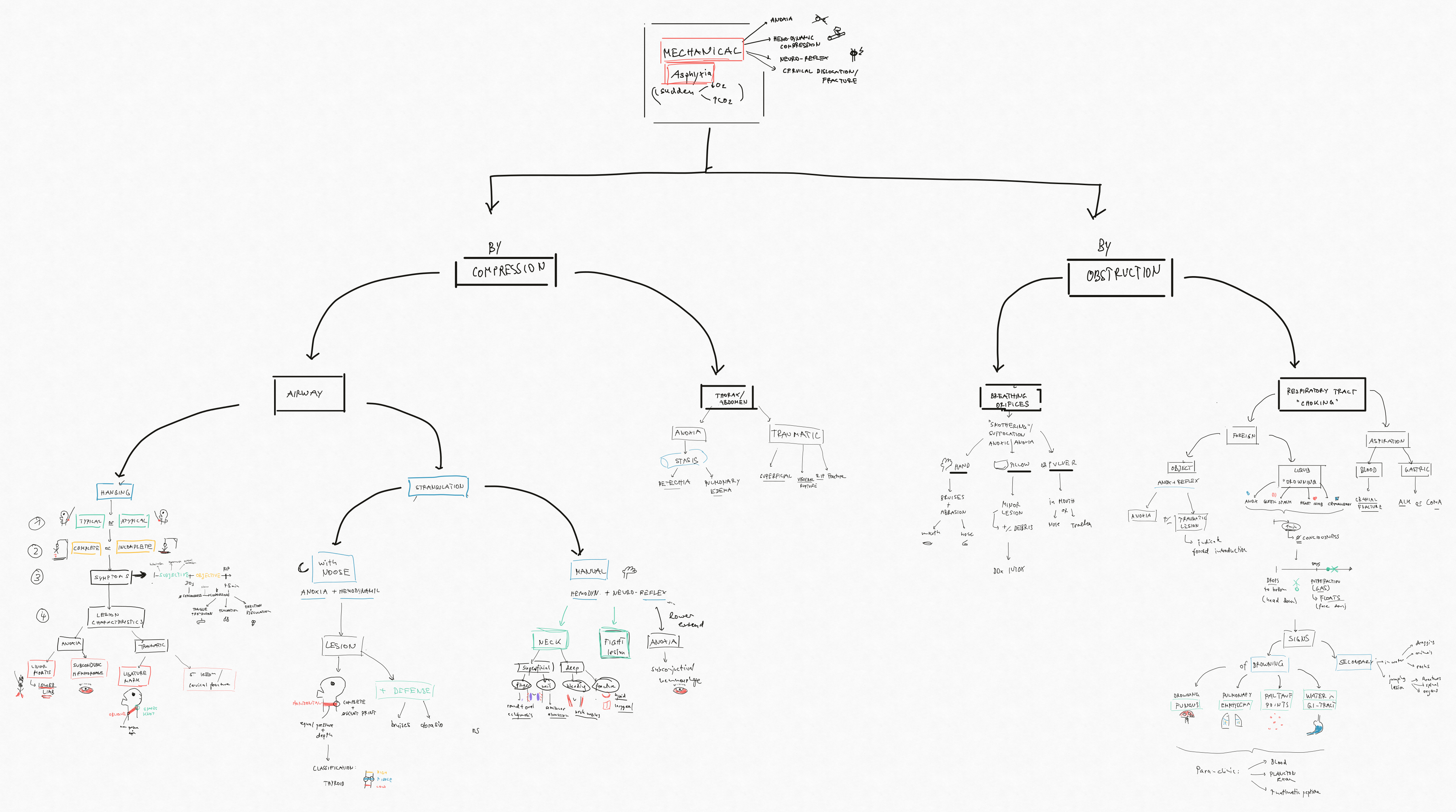
- Injuries depend on the aggressor's force, the injured region, and the victim's reactivity.
- Two types of traumatic mechanisms:
- Compressing: Manual strangulation or choking, resulting in ecchymosis, laterocervical abrasions, and abrasions around the nostrils and mouth.
- Direct striking: Serious injuries are not usually performed, but can lead to various types of trauma depending on the affected area:
- Craniocerebral trauma: Bruises, hematomas, visceral cranium wounds, undepressed linear fractures, meningeal hemorrhages.
- Thorax trauma: Contusions, rib fractures.
- Abdominal trauma: Contusions, rupture of organs, hitting in the solar plexus can lead to death by inhibition.
- Particular types of trauma: Traumatic shock, chin hitting leading to a fracture mediated to the base of the skull.
- Maxillofacial associated trauma: Oral cavity injuries, blunt wounds, dental fractures, fractures of the nasal bone, fractures of the superior jaw, fractures of the mandible, fractures of the malar bone and temporo-zygomatic arch
- Consequences of blows made with the fist or palm:
- Lesions such as ecchymoses, excisions, and hematomas
- Rare cranial or rib fractures
- Diffuse subarachnoid hemorrhages by breaking a cerebral aneurysm
- Death by inhibition when punching in regions like the carotid sinus, precordial, or solar plexus
- Organ breaks (cavities, parenchymatous) when fist punches are applied to the abdomen. Absence of blood infiltration in the abdominal muscles, which exists around the spine or in the mesentery
- Injuries are of higher intensity (compared to palm+fist)
- Injuries applied to the skull can result in severe craniocerebral lesions, such as linear or dehiscent fractures with depressed skull fractures.
- The mechanisms of craniocerebral lesions include
- direct strikes,
- hits over a fixed head leading to fractures on the fixed portion or cranial base
- compression of the head on a rough plane causing bipolar lesions.
- Hits applied to other parts of the body can result in:
- Neck: Closed injuries from direct impact or compression, potentially leading to death by inhibition or mechanical asphyxia.
- Thorax: Rib fractures occurring on a plane, sometimes with visceral affections.
- Abdomen: Contusions and organ ruptures, potentially leading to death through inhibition of the solar plexus or testicles. A variant is repeated kicks followed by compression (trample), causing thoraco-abdominal trauma with rib fractures and visceral ruptures.
- Interest areas not covered by clothes
- Lesions: bruises, abrasions, bite wounds, amputation of anatomical segments
- Dental imprint reconstruction possibility
- Animal bites: any body part, varying depth, specific features based on animal type
- Classification of bites according to the mechanism:
- Broken bite: Skin damage achieved by compression with frontal-incisive and canine teeth of both jaws. The movement of the teeth on the surface of the skin results in the skin being taken off by depositing the cells on the lingual surface of the teeth of the aggressor. These biting injuries occur more frequently in self-defense.
- Tuck bite: A suction of the oral cavity occurs. The movement of the teeth on the skin folds causes the epidermis to be taken off and the cells to be deposited on the side of the teeth of the aggressor. Such bites appear in sexual assaults.
- Mixed bites: Appear in compression associated with suction. The action of the teeth can be static, when the teeth execute a perpendicular compression on the surface of the skin and the biting part of the body is immobile, or dynamic, when the teeth act at a sharp angle and the biting part of the body is moving, with a sliding of the teeth on the surface of the skin. In this case, the traces of the teeth are more pronounced, allowing the aggressor to be identified.
- On flat tissue surfaces (cheeks), the bite mark can be described as small erythematous zones that disappear within minutes to hours, or as blunt lesions (bruises, abrasions, tissue laceration), or punctured wounds produced by canines.
- Action on a prominent body segment (nose, toe, nipple, etc.) can cause amputation of the segment. The scars after healing have aspects depending on the tooth: elongated (incisive), round (produced by canines), square or rectangular (premolars or molars).
⚡ Physical agents


🧪 Chemical agents
- Onset phase (15-25% HBbCO):
- frontotemporal headache
- other neuro-psych signs (dizziness, nausea manic excitation, decreased auditory and visual perception)
- >40% HbCO:
- intense headache,
- muscle weakness,
- autonomic instability (hypotension, irregular breathing),
- can not leave the place of poisoning
- >60% HbCO
- Coma (w/ hypothermia)
- Convulsions
- Death (depression of vital centers)
- Blood has a red-carmine (pinkish) color that can be seen in skin, muscles, and organs (lividities).
- Accidental intoxications are more frequent, followed by suicide.
- CO intoxication in the domestic environment should be distinguished from CO2 intoxication (in case of fermentations in closed rooms) or intoxications with other toxic gases like H2S.
Blocks cytochromoxidase (in mitochondria) → blocked oxidoreduction → histotoxic hypoxia 📷

- Inhalation of hydrogen cyanide (HCN) at 0.3 mg/liter of air
- Ingestion at 1 mg/kg
- Symptomatology:
- Loud screaming
- Falling
- Loss of consciousness
- Convulsions
- Mydriasis
- Staccato breaths
- Death by respiratory cessation in 1-2 minutes
- Phases of acute poisoning:
- Excitation phase with frontal headache, vertigo, trembling, convulsions, digestive disorders, respiratory disorders
- Depression phase with cyanosis, bradypnea, arrhythmias, extremity hypothermia
- Coma: Can lead to death by respiratory and circulatory paralysis or recovery without sequelae
- Morphopathological findings:
- Early and intense cadaveric stiffness
- red-carmine blood
- Delayed rotting onset
- Bitter almond scent in the viscera
- Local irritative: Provoking irritation in a specific area.
- Capilarotoxic: Causing toxicity in the capillaries.
- Demyelinating: Inducing damage to the protective covering of nerve fibers.
- Hepatobiliary degenerative: Resulting in degeneration of the liver and biliary system.
Fun fact: “A highly utilized substance in passionate crimes during the late 20th century.”
- GI: n/v, diarrhea, dehydration
- hepatorenal failure
- precordial pain
- non-purulent rashes
- toxic shock
- cerebral hemorrhagic edema → coma
- Morphopathological findings:
- Edemo-hemorrhagic & necrotic gastroenteritis
- Degenerative hepatorenal lesions
- Mucosal hemorrhages
chronic arsenic intox is similar to chronic gastroduodenitis
- Digestive Symptoms:
- Mucosal lesions with intense pain
- Vomiting with exfoliation of digestive mucous membranes
- Cramps
- Bloody stools
- Perforation with peritonitis, shock, and death
- Long complication: Digestive stenosis
- Pulmonary Symptoms
- Hyperventilation with acidosis to pulmonary edema
- Dyspnea
- Laryngeal edema and death through asphyxia
- Others
- Hemolysis with oligo/anuria and hemoglobinuria
- Hemolytic jaundice in the liver
- Hypocalcemia
- Neuro-muscular convulsions
- Renal colitis with oligo/anuria
- Clotting disorders to hemorrhage
- Morphopathological findings:
- Corrosive lesions externally in the form of eschars
- Different stains in the skin
- Lesions of cerebral hyperemia
- Acute pulmonary edema
- Necrosis and hepatic degeneration
- Group I: Extremely toxic, with LD50 below 50 mg/kg (marked in red on the packaging)
- Group II: Powerfully toxic, with LD50 between 50-200 mg/kg (marked in green on the packaging)
- Group III: Moderately toxic, with LD50 between 200-1000 mg/kg (marked in blue on the packaging)
- Group IV: Reduced toxicity, with LD50 over 1000 mg/kg (marked in black on the packaging)
- Organophosphorus pesticide
- Blocks cholinesterase, leading to acetylcholine accumulation
- Symptoms
- “Acetylcholine-like”: myositis, lacrimation, nausea, vomiting, diarrhea, abdominal cramps, salivation with bronchial hypersecretion and pulmonary edema, sweating, bradycardia with collapsing tendency,
- “Nicotinic-like”: muscle cramps, muscle fibrillation, tonic-clonic seizures
Morphopathological features:
- Greenish coloration of gastric mucous membranes
- Petroleum odor in stomach content
- Quickly installed and long-lasting rigidities
- Generalized capillary endarteritis-type lesions
- Symptoms occur after a 10-20-hour latency period
- 🍤Gastrointestinal disturbance phase:
- Painful vomiting
- Diarrhea
- Abdominal cramps
- Lasts 2-5 days
- Complications
- Severe dehydration with hydroelectrolytic deficiency
- Metabolic imbalances
- Hypoglycemia
- Azotemia
- Acido-basal disorders
- Acute circulatory failure
- Collapse
- 🧠Nervous system disorders:
- Headache
- Somnolence
- Prostration
- Mydriasis
- 🍑Liver damage:
- Jaundice, Liver failure
- Third phase of apparent remission
- Phase IV with death in 70% of cases
- 🫁Pulmonary disorders:
- Acute pulmonary edema
- 🥐Kidney disorders:
- Acute renal failure
- Phase 1: Occurs at alcohol levels between 0.4-1.5 g (light drunkenness)
- Euphoric state with increased intellectual functions, apparent cerebral stimulation
- Disinhibition and impulsiveness, decreased self-control and willpower
- Weakening of attention and narrowing of the visual field
- Tachycardia and peripheral vasodilatation with heat sensation
- Phase 2: Occurs at alcohol levels between 1.5-3.0 g (drunkenness)
- Psychosensory disturbances affecting intelligence, conduct, and motricity
- Alteration of intellectual faculties, judgment, attention, and memory
- Incoherent speech, sleepiness, loss of self-control, onset of instincts and passions
- Sensory disorders
- Phase 3: Occurs at alcohol levels from 3.0 g upwards (comatose drunkenness)
- Deep central nervous system depression, comatose state
- Reflex abolition, hypothermia, lowering of vital functions, metabolic acidosis
- Possible complications: collapse, death, or comeback with characteristic disorders
- Aggravating factors: cold, lung complications, cerebral-meninges and pancreatic hemorrhages, asphyxia through airway obstruction
- Gastrointestinal issues (gastritis, hepatitis, cirrhosis)
- Neuropsychiatric problems (polyneuritis, personality disorders, delirium, hallucinations, dementia, alcohol epilepsy, delirium tremens)
- Cardiovascular problems
- Vitamin deficiencies
- Endocrine disorders
- Decreased resistance to infection
- Psycholeptics:
- Hypnotics: barbiturates (amital, luminal, phenobarbital, cyclobarbital), nonbarbiturates (piperazine-noxyron derivatives, urethanes, aldehyde-chlorohydrate)
- Minor tranquillizers (anxiolytics): diphenylmethanes (hydroxyzine, atarax), aliphatic alcohols (meprobamate, carbaxime), benzodiazepines (diazepam, napoton, oxazepam)
- Major tranquilizers (neuroleptics): phenothiazines (chlorpromazine, levomepromazine, thiopromazine), rauwolfia alkaloids (total raunervil and reserpine-hyposerpil), thioxanthene (fluanxol), other (sulpiride, etc.)
- Psychoanaleptic:
- Classical: caffeine, amphetamine
- New: lucidril, lidepram
- Anti-depressives:
- Tricyclic: antideprine, carbamazepine, amitriptyline
- New IMAO derivatives: nialamide, proniazid
- Dis-leptics: lysergic acid (LSD)
Depressive effect on the cortex and reticular formation
- Sleep induction
- Decrease in respiratory and gastrointestinal muscle tone
- Disappearance of peristalsis
- Symptoms:
- Drowsiness
- Behavioral and neuro-vegetative disorders
- Hypotonia
- Abolition of osteotonic reflexes
- Respiratory disturbances
- Morphopathological findings:
- Toxic-degenerative encephalopathy
- Medico-legal implications:
- Increased incidence of suicide, accidents, and murder
Examples:
- Atropine
- Scopalamine
- Curare
- Yohimbine
- Coniine
- Hashish
- Cocaine
- Morphine is the most important alkaloid in the phenanthrene group found in opium.
- Morphine has dose-dependent effects on the central nervous system.
- Acute poisoning symptoms include euphoria, psychomotor agitation, coma, sweating, pruritus.
- Higher doses can cause sensory disturbances, somnolence, myositis, and deep coma leading to respiratory and cardiovascular complications.
- Chronic poisoning (morphinomania) occurs after repeated administration and is associated with physical and psychological dependence.
- Symptoms of morphinomania include myosis, constipation, decreased secretions, weight loss, and mental manifestations.
- Morphine derivatives include heroin, hydromorphone, and pethidine.
- Therapeutic drug accidents can occur due to the expansion of the therapeutic arsenal, leading to shared responsibility.
- Situations that may result in therapeutic drug accidents include transfusion accidents, anesthetic accidents, accidents caused by confusion, and iatrogenic gaseous embolism.
- Forensic expertise should focus on the correct establishment of the disease diagnosis and appropriate indication of the drug, adherence to contraindications as per therapeutic guidelines, proper administration and tracking of the drug, and the correct treatment of the accident once it occurs.
- Investigating drug intolerance or allergy through testing is crucial.
- Informed consent is an important consideration as the right of the patient.
🐽 Sexual offenses
- The hymen, a structure at the entrance of the vagina, can vary in shape and size.
- Smooth hymenal edges indicate no difficulties in diagnosis, while incisions and folds may present challenges.
- Forensic expertise can determine the occurrence of sexual intercourse, presence of traumatic injuries, and potential factors affecting defense or free expression of will.
- Gynecological examination can establish the occurrence of sexual intercourse and its approximate timing.
- Evidence collection includes examining the victim, alleged aggressor, and relevant items.
- The prosecution needs to demonstrate constraint, impossibility of defense, and free expression of will in rape cases.
- Psychiatric examination can assess an individual's capacity to consent to sexual intercourse.
- Demonstration defloration is determined through clinical examination.
- The appearance of the lesions depends on the hymen's conformation and the presence of irritants (e.g., leucorrhea, repeated sexual contact, antiseptic wash, irritant mucosa).
- To demonstrate sexual intercourse with a woman who has engaged in sexual contact in the past, the presence of sperm in the vagina can be shown by collecting vaginal secretions and examining them. In cases of interrupted sexual intercourse, sperm may be found on lingerie or at the site of ejaculation. In cases of forceful sexual contact, vaginal or, less commonly, perineal tears may be observed in mature women.
- Disorders of sexual intercourse
- Disorders in choice of sexual subject (paraphilia)
- Classification of sexual deviations:
- Sodomia ratione modi: Includes deviant heterosexual relationships such as mutual digital masturbation, felation, anal coitus, interferes, intermamar, cunnilingus, etc.
- Sodomia ratione sexus: Includes male homosexuality (pederastie, uranism) and feminine (lesbianism, tribadism, safism).
- Sodomia ratione generis: Satisfaction of the sexual instinct by implications of animals (zoophilia, bestiality).
- Other perversions: Necrophilia, exhibitionism, algolagnia (sadism, masochism), voyeurism, etc.
- Another classification:
- Autoerotics (self): Masturbation, voyeurism, fetishism, self-exhibitionism.
- Aloerotics (others): Homosexuality, zoophilia, heterosexual perversions.
- Modern classification:
- Transsexualism
- Paraphilies
- Dysfunctions in sexual intercourse.
- Forms of impotence in males: cohabitation impotence and procreation impotence.
- Cohabitation impotence: forensic expertise considers organic and psychological factors that can cause sexual dysfunction.
- Erectile dysfunction
- Organic causes of erectile dysfunction: sclerosis, tabes, acute and chronic infections, chronic poisoning, testicular insufficiency, sequelae after craniocerebral trauma, penis lesions (congenital phimosis, posterior urethral lesions).
- Psychological causes of erectile dysfunction: asthenic neurosis, psychological trauma due to sexual failure, which can create a feeling of inferiority towards the partner.
- Libido disorders: caused by hypogonadism, acute and chronic infectious diseases, depression, etc.
- Ejaculation disorders: premature ejaculation (Casanova type) or delayed ejaculation (Rasputin type). Premature ejaculation occurs before female orgasm.
- Orgasm disorders: causes overlap with those described above.
- Procreation impotence: implies a lack of normal sperm production or impermeable excretory channels and impaired ejaculatory reflux.
- Aspermia: the absence of sperm elimination after sexual intercourse.
- Oligospermia: low sperm count in sperm fluid.
- Necrospermia: immobile sperm with degenerative forms.
- Expertise should ensure the identity of the examined product to prevent fraud.
- Normal ejaculate: 2-3 ml of sperm fluid, with 60 million spermatozoa/ml. At least one normal, mobile sperm excludes male sterility. Repeat expertise if necessary.
- Total necrospermia and azoospermia may be grounds for exclusion of paternity, if corresponding to the conception period of the child.
- Coital Impotence in females:
- Vaginal atresia
- Dyspareunia
- Impotence of fertilization
- Inability to hold the embryo (causing abortion)
- Disorders in the physiological process of birth
- Possible causes of female sexual dysfunctions:
- Vulvo-vaginitis
- pH changes
- Cervical lesions
- Uterine hypoplasia
- Uterine static disorder
- Uterine tumors
- Diencephalo-pituitary-ovarian dysfunctions
- Collaboration between forensic expert and specialists: Gynecologist, Endocrinologist, Neurologist