Childcare
- Intrauterine
- (Neonate)
- Infancy
- (Toddler)
- Childhood
- Adolescence
birth-28 days (1m)
1-12 month (1m–1y)
1-3 years
40 weeks, normal gestation between week 37-42
born before week 37
2.7-4.6 Kg, average 3.2 Kg
(3–4,5kg)
50cm
49 cm girls, 50cm boys
posterior 6-8 weeks (2m), anterior 12-18 month (1y – 1,5y)
High activity of androgen & estrogen axis
- GnRH (Gonadotropin-releasing hormone (GnRH)
- Luteinizing hormones (LH)
- follicle-stimulating hormone (FSH)
- high levels of androgens and estrogens
- 11 years (normal width 8-13)
- Growth Spurt at about 12 years
- 13 (normal width 9-14)
- Early sign: testicular volume increases >3ml
- Growth Spurt at 14
- Vocal change at 15
Tanner Stages 🎄 📷

Beginning of breast growth 🍈☎️
Beginn of Pubic hair growth
first period in girls, usually occurs during Tanner Stage B4 (about 2 years after the beginning of breastdevelopment)
- heredity and genetic factors
- Phenotype
- Race
- Sex
- Biorhythm and maturation
- Genetic disorders
- GH
- Insulin
- TSH/T4
- Sexual hormons
- Androgenes
- Estrogenes
- Cortisol
Growth hormone 🤡
the anterior purity gland 📷
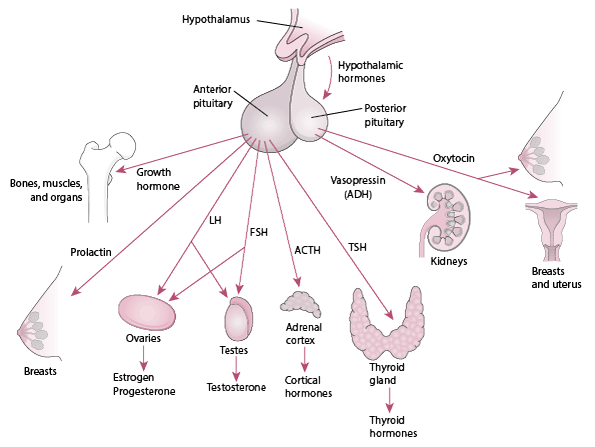
at niiiiiiight 🌝 and during puberty, after that, the levels gradually decrease
+GHRH, -Somatostatin and +Ghrelin

It stimulates 🍭 IGF-1 secretion from the🍑 liver (and other tissue) → stimulates differentiation of chondrocytes ( therefore 🦴bone growth) and stimulates 💪muscle growth through the differentiation of myoblatst SOOO actually GH doesn't make you grow but IGF-1 does👀
Its stimulates protein synthesis and triglyceride breakdown and betaoxidation in adipocytes (that's why 14 year old boys are always such lauchs 🥬) and it stimulates carbohydrate metabolism to maintain normal bloodsugar levels
Stimulates the thyroid gland to release T4 → neuronal development🧠
Androgens: testosteron → sexual development and maturation (and its the reason why you have spots all over you face 🌋)
Estrogens: estradiol → breast development and maturation of the uterus
💪🏼 (its anabolic)
- adrenal gland
- maintaining normal blood pressure and blood glucose
- catabolic effect
- if excess: stops growth (so don't stress you children or they will be tiny) but decreased level also stop growth
- Prenatal factors
- Infections
- malnutrition
- obstetrical factors
- premature birth
- low weight
- complications like sepsis, asphyxia
- Postnatal factors
- malnutrition
- asthma
- chronic infections
- heart disease
- prolonged steroids
- socioeconomic levels
- cultural factors
- emotional factors
- climate
- weight
- length/height
- head circumference
- skinfold thickness
- mid-upper arm circumference
50th percentile
3rd -97th percentile
- length for age and weight for age
- head circumference for age and weight for length
- BMI for age
- stature for age and Weight for age
identify children that are stunted due to malnutrition/oter causes of short statue
used to assess underweight, NOT obesity

helps identify children with acute and severe weightloss aka wasting
indicated for obesity
screening for obesity
Kg/m2
follows a line or percentile
Doesn’t cross through percentiles
- growth line crosses a z score line

- sharp decline/incline in growth
- flat growth line
Weight / weight for length at the 50th percentile → gives you a percentage
- < 70 sever malnutrition
- 70-80 moderate malnutrition
- 81-90 mild malnutrition
- 90-110 normal
- 110-120 overweight
- >120 obese
750 g/month
500g/month 2nd 4 month
250g/month 3rd 4 month
200-250g/m 2nd yr of life
1-1.5 kg/year after age of 2
1st year 20 cm, by 2 years roughly half of adult height attained
- For boys: father’s height (cm) + mother’s height (cm) + 13/2
- For girls: father’s height (cm) + mother’s height (cm) – 13/2.

80% of adult sze by 2 yrs of age
140 Bpm
100 bpm
almost normal 90 bpm
coz 50-35/minute are perfectly normal
HbF is the main hemoglobin in the forst 2-3 month
HbA from 6 month on

false, salivation starts at 3 month
coz amylase is inadequate
yep
⇒ 📷high-yield until 1y ⇒ 📷detail

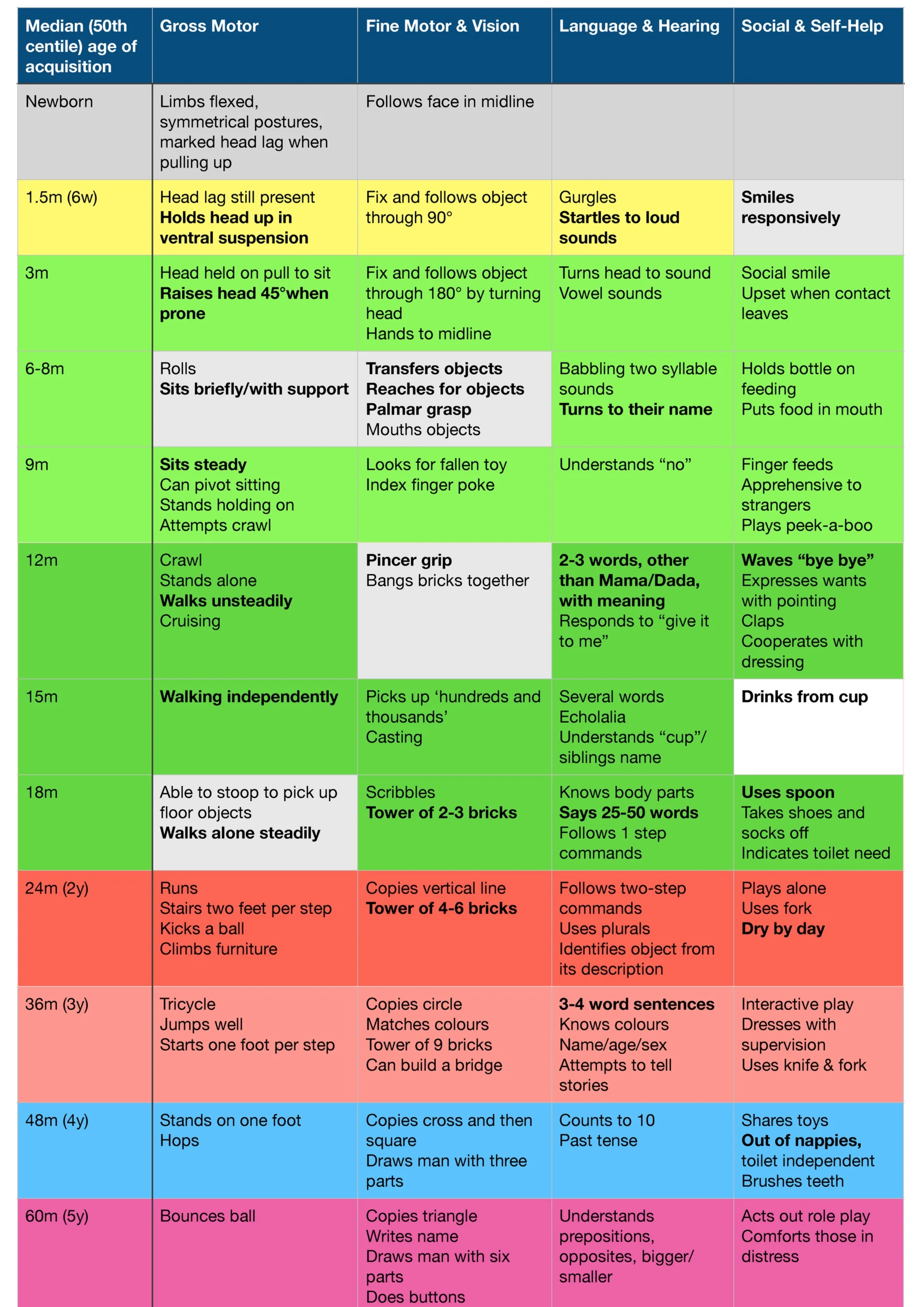
- CANNOT lift or hold its head when sitting/lifted! → always support the head
- can lift head when lying
- primitive reflexes:
- Babinski
- Moro
- palmar hand grasp
- Placing
- plantar grasp
- Rooting and sucking
- stepping and waling


- can track objects
- increased vision

- raises up when laying on belly
- sit with support, keeps head up
- primitive refelxes have disappeard
- can sit alone (up to 30 secs)
- starts grasping opjects (doesnt use thumb opposition)
- turns from back to stomache, can push up to raise shoulders
- starts crawling
- walks while holding hand of an abdult
- sits without support, can sit down from standing position
- pulls inot standing position (with helpf of furniture)
- begins to balance while standing alone
- take steps, begins to walk
- walking at 18 month
maternal IgG up to 3 month
between 6- 24 month
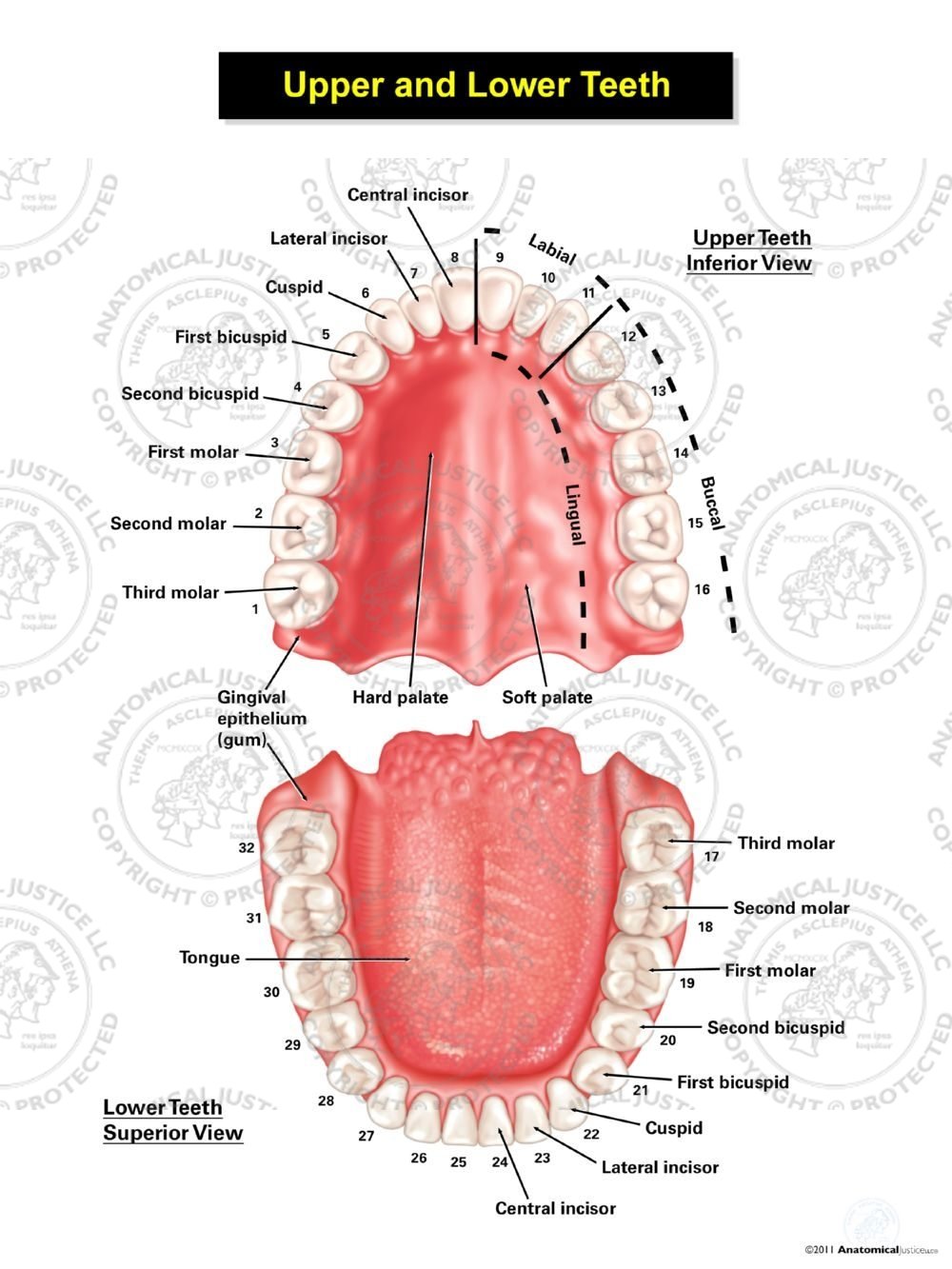
32 (coz wisdom teeth don’t count) 📷
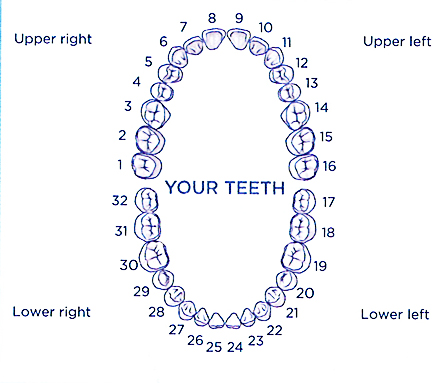
1st Molar → 6 year molar
2nd molar erupts at about 12
supine or prone position → Side rolls → Sitting → 4-footed stand → Crawling Pulling up to stand → Standing with holding → Walking with holding→ Free walking.
Spontaneous articulation —> Lip-closure sounds—> Syllable chains —>Syllable doubling (e.g. da-da, ba-ba) —> Symbolic language (e.g. woof-woof for a dog, nam-nam, for food)—> 1-word language —>2-word language —>3-5-word language —>Sentences with word sequences —>Grammatically correct language
- Free walking
- Things can be held in hands, can be moved or passed to another person
- symbolic language
- known things can be recognized and outpointed in book
- no playing with other children, but playing alone with other children around, understands “NO”
- Stable Connection to Parents/other Main contact person, can be separated for 1-2 hours
- Running with clear arm swing and steering around obstacles
- Precise 3-finger tip grip (thumb, index and middle finger)
- 3-5 word sentences, no pronunciation mistakes
- drawing, child comments on what it is drawing, can keep itself busy for 20-30 minutes
- Playing games together with other children for at least 20-30 minutes, imitates adults in roleplay
- can be without its parents/main person for hours
- Walking stairs without holding on to smth
- crafting and using scissors, some letters and numbers can be written in capitals
- No mistakes in pronunciation, experienced events can be explained in the right logical and chronological order
- knows the names of colors and general umbrella terms like animals, plants, clothes, Food…
- Cooperates in play with other children, invites others over, gets invited, can share family with others
- can be separated from parents for hours, even over night (PJ Party wohhoo🥳)
diagnostic considerations about the causes of the developmental delay are necessary. means some things have to be excluded:
- neuro–muscular diseases
- genetic disorders
- developing disability
T
Human milk = less proteins & more lactose
Composition (g/100 mL)
Nutrient | Human Milk | Cow Milk |
Proteins | 0.9-1.1 | 3.4 |
Casein | 0.35-0.45 | 2.8 |
Whey/Casein | 60/40 | 20/80 |
Lipids | 3.5 | 3.7 |
Lactose | 7 | 4.6 |
Minerals | 0.2 | 0.8 |
Energy | 66 kcal/100 mL | 65 kcal/100 mL |
- enzymes
- lipoprotein lipase for fat digestion
- other enzymes for fat digestion
- Growth modulators/factors
- epidermal growth factor → maturation of infants mucosa
- nerve growth factor
- insuline like growth factor 1 and 2
- taurin → development of retina
- sterile, always available
- reduced risk of necrotozing enterocolitis and infections
- associated with better cognitive development
- low osmotic load
- better mother child bonding
- loss of excess weight gained during pregnancy
- long term: reduced risk for breastcancer, ovarian cancer
- decreases costs
- better for environment
- galactosemia
- Infection risk
- HIV positive mother (can be passed)
- antiretroviral drug use
- mother with active tuberculosis
- illegal drugs
- infected lesions on breast (eg herpes)
- Drugs
- chemo
- radioactive compounds

On demand, baby-led 📷

- Infections
- masitis
- abscess
- candida infection
- anatomical abnormalities if the breast
- problems of the infant
- lip cleft
- congenital heart disease, kidney problems
dont use cowmilk befor 12 month
- proteins 7% of calories in human milk and 20% on cow milk
- human milk less casein
- cowmilk hogher concentrations of electrolytes
Soy or cowmilk protein
- galactosemia
- lactase deficiency
- vegan diet
lactose-free, hypoallergenic/non-allergenic formulas, antireflux, human milk fortifications
- atopic dermatitis
- resp and gastr. problems
- blood in the stool
→ you give hypoallergic formulars
restlessness, failure to thrive, crying
evaluate the breastfeeding procedure
exclude medical problems
increase nutrient intake
postprandial discomfort
regurgitation and vomiting
wight gain
abdominal distention
insufficent amount oif food or fluid
excessive fat or proteins in diet
increase the amout of fluid used for formula preparation
paroxysmal abdominal pain, crying, distended abdomen, symptomes relieved by stool admission
hot waterbottle, holding the child upright/prone across the lab
after 6 month
- salt sugar restricted
- eggs fush and nuts are potential allergenics
- start by introducing just one new food at a time
F, a variety is recommended
Age | Energy needed per day* | Texture | Frequency | Amount of food at each meal |
6-8 months | 200 kcal/day | Start with thick porridge, well-mashed foods. Continue with mashed family food. | 2-3 meals/day depending on the child's appetite, 1-2 snacks may be given. | 2-3 tablespoons per meal. Increase the quantity slowly. |
9-11 months | 300 kcal/day | Finely cut or mashed foods, and foods that the infant can pick up. | 3-4 meals/day, 1-2 snacks if requested. | ½ of a 250 mL cup/bowl. |
12-23 months | 550 kcal/day | Family foods, chopped or mashed if necessary. | 3-4 meals/day depending on the child's appetite, 1-2 snacks may be given. | ¾ to full 250 mL cup/bowl. |